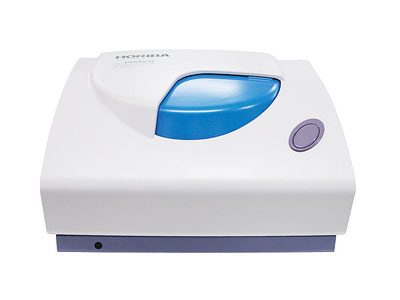
NanoPartica SZ-100V2 Series
Clear and simple multi-parameter analysis of nanoparticles!
Three analyzers in a single compact body deliver high-sensitivity, high-accuracy analysis of each measurement parameter.
Features
- Particle Size Measurement Range 0.3 nm to 10 µm
- Zeta Potential Measurement – 500 to + 500 mV
- Molecular weight 1 × 10³ to 2 × 10⁷ Da
- The SZ-100V2 Series applies sophisticated intelligence and learning capability to rapidly determine nanoparticle properties!
- Since the SZ-100V2 Series analyzer covers a wide sample concentration measurement range, sample dilution and other preprocessing is nearly eliminated.
- The use of a dual optical system enables measurement of high-concentration samples such as slurry and ink pigments as well as low-concentration proteins and polymers.
- A single device analyzes the three parameters that characterize nanoparticles: particle size, zeta potential, and molecular weight.
- HORIBA-developed cells for zeta potential measurement prevent sample contamination. Simple analysis by means of ultra micro-volume dedicated cells (volume as low as 100 μL). Suitable for analysis of dilute samples.
- HORIBA-developed electrode for zeta potential cell made from carbon material, the material is not corroded by high salt samples such as saline.
Specifications
SZ-100-S2 Measurement Specifications
- Model: SZ-100-S2 (particle size and molecular weight measurement only)
- Measurement principles: Particle size measurement: Dynamic Light Scattering Molecular weight measurement: Debye plot method (static scattered light intensity)
- Measurement range: Particle size: 0.3 nm to 10 μm Molecular weight: 1000 to 2 x 10⁷ Da (Debye plot) 540 to 2 x 10⁷ Da (MHS Equation)*1
- Maximum sample concentration: 40 wt%*2
- Particle size measurement accuracy: Measurement accuracy of ±2% for NIST traceable polystyrene latex 100 nm spheres (not including variation in the standard particles themselves)
- Measurement angles: 90° and 173° (automatic or manual selection)
- Cells: Cuvettes
- Measurement time: Approx. 2 min. under ordinary conditions (from the start of measurement to the display of results for particle size measurement)
- Required sample volume: Minimum volume of 12 μL*3 to 1000 μL (differs depending on cell material)
- Usable liquids: Water, ethanol, organic solvents
Applications
Zeta Potential of
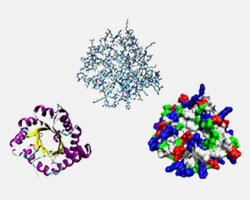
Proteins
This application note presents data from the SZ-100 using cells with unique, patented carbon coated electrodes that facilitate zeta potential
Zeta Potential of
Polyelectrolytes
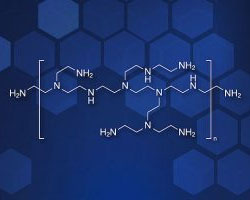
The zeta potential of polyethylenimine, PEI, is measured as a function of polymer concentration with the SZ-100 Nanoparticle Analyzer.Â
Zeta Potential of Clay for Wastewater Treatment
DLS vs. Diffraction of Flavor Emulsions
The particle size distribution of many flavor emulsions has a substantial effect on their performance. Particle size distribution can affect…
Wastewater Treatment Optimization with Zeta Potential
Suspended solids are a common impurity in wastewater from industrial and mining operations. In order for water clarity, the suspended solids are often allowed to settle.Â
Sizing Silica Particles
by DLS
In this application note, the particle sizes of two different silica dispersions are analyzed to demonstrate the utility of the SZ-100
Nanoparticle
Analysis
Nanotechnology is extremely diverse, ranging from novel extensions of conventional device physics, to completely new approaches based upon molecular